Bridging the boundaries between research evidence and local policy development


Nicola Carroll and Adam Crawford

This blog post is based on the Evidence & Policy article, ‘Cultivating ‘communities of practice’ to tackle civic policy challenges: insights from local government-academic collaboration in Leeds’.

Working across sectoral boundaries offers exciting prospects for academics and municipal policymakers to develop innovative solutions to local issues through exploring shared concerns from their distinct professional perspectives. Yet organisational boundaries present well-recognised impediments to research-policy interaction. Drawing on findings from a Review of Collaboration between academics and local government officers in Leeds, we propose that active cultivation of civic ‘communities of practice’ offers a promising approach for connecting research evidence with social, environmental and economic challenges that confront local authorities and their citizens.

Crucially, we argue that boundary crossing relationships between professionals are key facilitators of effective civic collaboration that need to be nurtured and supported organisationally. This means putting inter-sectoral mechanisms in place that help ‘bridge’ institutional divides, without stifling the enthusiasm and dynamism that underpins meaningful knowledge exchange.   

Continue reading

Evidence & Policy Call for Papers – Exploring the Role of Youth-led Research in Policy Change

Special Issue Editors: Mariah Kornbluh and Jennifer Renick

“It is a fundamental right of youth and young adults to participate in designing the programs and policies aiming to serve them.” (United Nations, 1989).

In recent years, there have been growing calls for the ‘democratization’ of research evidence, which argues for broadening the kinds of evidence that is considered legitimate in informing practice and policy (Doucet, 2019; Kirkland, 2019; Wegemer & Renick, 2021). Within youth-led participatory action research (YPAR), youth conduct systematic research and generate evidence to draw on to advocate for policy and/or programmatic changes (Kornbluh, 2023; Ozer et al., 2020). Such an approach aligns with the push for the democratization of evidence in broadening who are considered legitimate producers of knowledge (Fine & Torre, 2021; Ozer et al., 2020).

This special issue will explore the intersections between the use of research evidence to inform policy and YPAR, with the broad goals of studying and strengthening models for impact. In this special issue, we seek scholarship in theoretical frameworks, methodologies, presentations, and case studies that embrace YPAR as a vehicle for youth-led policy change. 

Submission for this issue might address the following topics:

  • Descriptive case studies of YPAR informing (or attempting to push for) policy change 
  • Theoretical models and approaches to YPAR-initiated policy change
  • An examination of the role of power and politics in relation to youth-led policy change
  • Examples of strategizing for scaling-up action from YPAR projects into policy change
  • Practices or procedures for addressing adultism and/or preparing adults to accept and implement youth-led policy change
  • Empirical explorations of the impact of YPAR-initiated policy change 

We imagine this special issue to function as a way to explore the research to practice gap within policy change, and whose perspectives are missing. Furthermore, we hope this issue will highlight ways in which policy makers can more critically accept or invite the voices of young people. 

Deadline: Interested authors should send a 300-word abstract to Special Issue Editors Dr Mariah Kornbluh at the University of Oregon (mkornbl2@uoregon.edu) and Dr Jennifer Renick at the University of Memphis (jrenick@memphis.edu) by 30 November 2024. Invitations for full paper submissions will be sent in mid-January, and full papers will be due by end of May 2025.

Who do teachers turn to in times of political trauma?


Mariah Kornbluh, Amanda Davis, Alyssa Hadley Dunn and Kristina Brezicha

This blog post is based on the Evidence & Policy article, ‘Exploring the role of evidence-based educational resources and brokering in the wake of political trauma’.

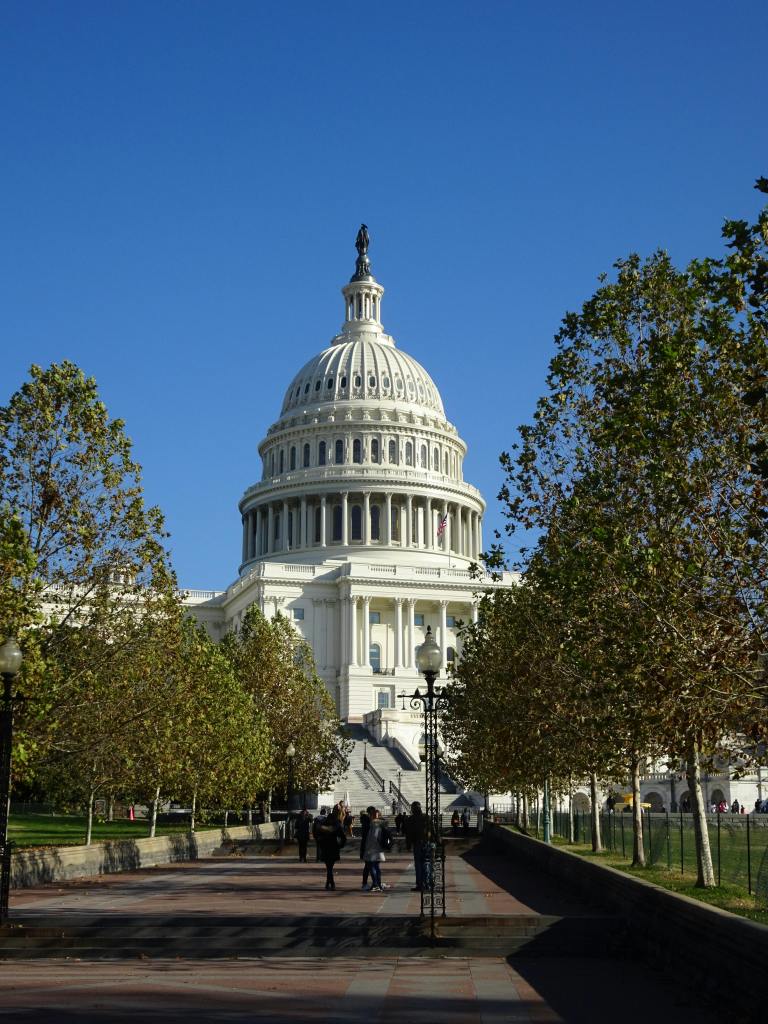
On 6th January 2021, thousands of people descended upon the US Capitol to disrupt the counting of electoral votes in the US presidential election. Televised acts of physical violence were broadcast across the nation and many children were watching. Within hours of the attack, educators were ‘floundering’, trying to figure out if and how they would discuss what happened with their students the next day. Take for example, a Social Studies Subject Coordinator in Florida:

Kids come into school looking for answers. What does that mean? I’m like, ‘alright, what do we got?’ Because teachers were going to come to me, and I feel it was important that as a district person, we provide support. My superintendent said, ‘we’re not mentioning it.’ I was like, ‘We gotta do something, we gotta do something. If we just put out a statement. What is, what is the role of the Vice President? And why did we do that on January sixth?’ It was a teachable moment.

Continue reading

Evidence & Policy Call for Papers – Special Issue on Research (Mis)use and Mis/Disinformation in and around Education

Special Issue Editors: Joel Malin and Chris Lubienski

Mis- and dis-information are growing problems world-wide, corrupting trust and engagement in consumer markets, media, politics, and other institutions. This issue is particularly concerning for research-driven areas that involve public policy. Education is a prime area. Not only do education policymakers seek ‘research-based’ policy, but schools themselves, while subjected to false information campaigns, are also uniquely suited as institutions that have the capacity to counter misinformation by providing fact-based learning and critical thinking skills.

Continue reading

Minding the gap between research and practice in adult social care


Karen Gray, Ailsa Cameron, Christie Cabral, Geraldine Macdonald and Linda Sumpter

This blog post is based on the Evidence & Policy article, ‘Shooting in the dark’: implications of the research–practice gap for enhancing research use in adult social care’.

There is great potential for research to inform adult social care practice. However, a gap remains between this potential and its actual use by those who plan, commission or deliver care. In our recently published paper in Evidence & Policy we consider this gap. We also reflect on the implications of the continuing need to ensure that research is there – relevant, accessible, usable and used.

In 2022 we interviewed people in three local authorities. When asked what they thought research was for, most emphasised the belief that it should improve the lives of people using services. Some mentioned improving their own practice. Others talked about its value in helping them ‘fight their corner’ when a difficult decision had to be made or course of action justified.

Continue reading

Are evidence-based policy and democratic equality reconcilable?


Tine Hindkjaer Madsen

This blog post is based on the Evidence & Policy article, ‘Reconciling science and democracy: evidence-based policy as seen from the perspective of a role-based democratic theory’.

For policy to be effective, it must be informed by reliable evidence, proponents of evidence-based policy argue. While this may be true, the evidence-based policy ideal nevertheless also conflicts with the requirements of democracy. This is because political equality is an essential element of democracy and evidence-based policy confers superior political influence on those who supply the evidence relative to ordinary citizens.

In my paper recently published in Evidence & Policy, I reflect on whether the evidence-based policy ideal is reconcilable with democratic equality after all. I first argue that evidence-based policy in fact also advances the value of political equality, because political equality requires that citizens be the choosers of political aims and utilising appropriate, high-quality evidence is the most reliable method of identifying how to achieve citizens’ aims. That is of course not to say that utilising appropriate, high-quality evidence will always lead to true beliefs about how to achieve a political aim, but it is the body of information we have that is most likely to be true and therefore utilising appropriate, high-quality evidence makes it more likely that citizens’ aims be realised. 

Continue reading

Big voter is watching you: how politicians evaluate expertise


Anina Hanimann

This blog post is based on the Evidence & Policy article, ‘How perceptions of voter control affect politicians’ evaluations of expertise in the news: a survey experiment on the role of accountability beliefs’.

The news serves as a crucial source of expertise for members of parliament (MPs), offering them cost-effective policy advice. However, the public nature of expertise in the news can significantly influence how MPs perceive and evaluate such expertise. Politicians who feel under intense scrutiny by their constituents may be more inclined to make decisions that align with public opinion, are easily justifiable, or simply appear to be the ‘right’ choice. These motivations can significantly shape the evaluation of expertise presented in the media.

My recent study in Evidence & Policy delves into this complex dynamic. I explore whether MPs’ assessments of expertise in news media differ depending on their perceptions of voter control. To investigate this, I analysed survey data from Swiss cantonal members of parliament, who were tasked with evaluating the credibility of expert statements.

Continue reading

Everybody can claim that a practice or policy is evidence-based. But when is it justified to do so?


Christian Gade

This blog post is based on the Evidence & Policy article, ‘When is it justified to claim that a practice or policy is evidence-based? Reflections on evidence and preferences’.

When you search the internet, you will find a myriad of claims about different practices or policies being evidence-based. To avoid ‘evidence-based’ becoming merely a buzzword that everyone can throw around and use whenever they deem it suitable, it is important to consider the conditions for when it is justified for you as an individual or organisation to claim that your practice or policy is evidence-based.

My argument is that this is the case if, and only if, three conditions are met – an argument that suggests that it depends on subjective preferences whether you are justified in claiming that your practice or policy is evidence-based, and that it is important to give more attention to the normative dimension of the field of evidence-based practice and policy.

Continue reading

Scaling-up user-engagement in education research: drawing insights from Canada’s experience


Bernadine Sengalrayan and Blane Harvey

This blog post is based on the Evidence & Policy article, ‘Engaging knowledge users in Canadian knowledge mobilisation research: a scoping review of research in education.

In the ever-evolving landscape of education policy and practice, research has a critical role to play in informing planning and action. However, in many countries, the link between education research conducted by academics and the potential users of that research in schools and other educational settings is not robust. Knowledge mobilisation (KMb) approaches are seen as an important way to bridge the gap between research production and its practical application in any number of settings, including education.

To better understand if KMB practices are helping to inform educational policy and practice, we explored the changing dynamics of research producer-user connections in Canadian K-12 teaching and education policy. Here are some of the highlights from our findings.

Continue reading

Learning from failure: improving behavioural health treatments through understanding mis-implementation

Grace Hindmarch, Alex R. Dopp, Karen Chan Osilla, Lisa S. Meredith, Jennifer K. Manuel, Kirsten Becker, Lina Tarhuni, Michael Schoenbaum, Miriam Komaromy, Andrea Cassells and Katherine E. Watkins

This blog post is based on the Evidence & Policy article, Mis-implementation of evidence-based behavioural health practices in primary care: lessons from randomised trials in Federally Qualified Health Centers, part of the Special Issue: ‘Learning from Failures in Knowledge Exchange’.

“This is disappointing, but I agree we’ve done the best we can.” 

– CEO of a rural health care system

In October 2021, a rural healthcare system in the US discontinued implementation of a new program to improve access to quality care for patients with co-occurring opioid use disorder and mental health disorders. The program’s mission, fueled by passion for patients, was to help complex patients not fall through the cracks. After two years of immense effort, the system experienced ‘mis-implementation.’  Mis-implementation refers to unsuccessful efforts to implement treatments in real-world settings. Although it is a disappointing outcome, studying mis-implementation can provide insights to improve processes and make changes more successfully in the future.

Continue reading